
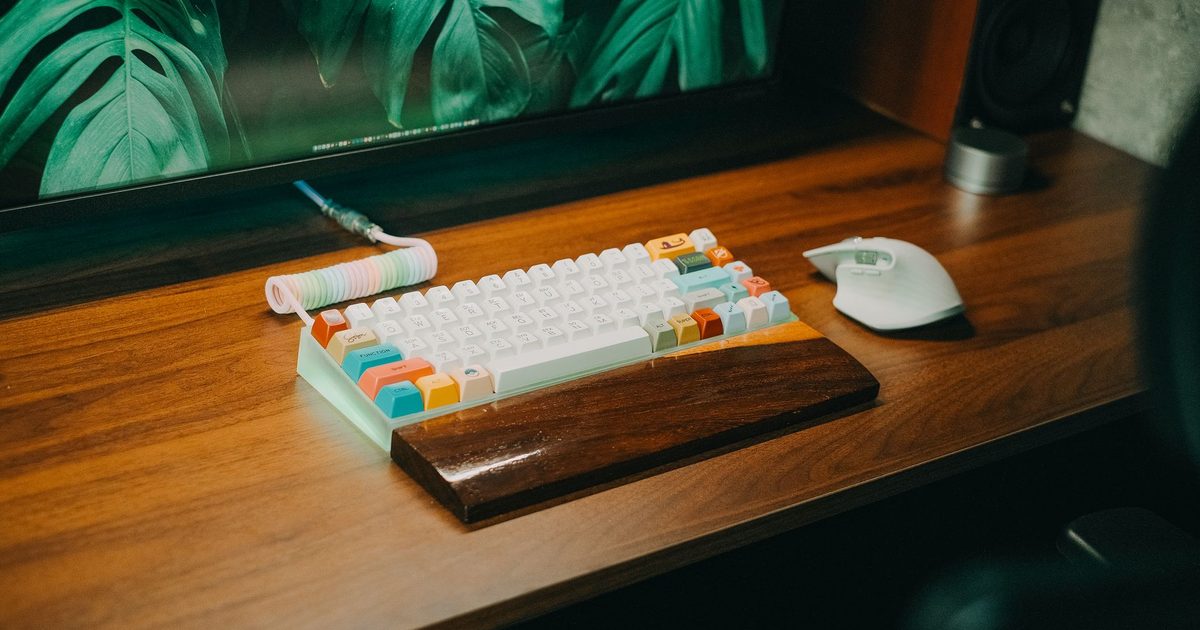
Spend a working day at the keyboard and the small things start to tell: the spot where the heels of your hands meet the hard front edge of the desk, the pad of the palm resting on nothing in the pauses between sentences. A wrist rest is the cheap answer to that, a soft bar or pad that fills the step down from the desk edge so your hands have somewhere to settle. The snag is that "wrist rest" covers three quite different objects, and the thin round-ups lump them together and rank a shelf of near-identical pads by how many people bought one. The question that actually settles it is simpler: what are you resting? A keyboard rest, a matched set for both hands, or a mouse rest. Answer that first, glance at the fill and the base, and one clear pick is left in each camp.
Start with what you rest, not the brand
Work out which hand is doing the complaining before you look at a single product, because the three types barely overlap.
A keyboard rest is the long bar that lies across the front of the board. It is what most people picture: one piece, sized to sit under both hands as you type, so the palms land on foam instead of the desk lip. If it is your typing hands that tire, this is the default.
A matched set adds a second, smaller pad for the mouse hand and usually a round coaster to go with it. It is the kit-the-whole-desk answer: both hands get a cushion, bought once and in one style, for roughly the price of a single good keyboard rest.
A mouse rest is a mouse mat with the wrist cushion built into its near edge, so the hand that works the mouse has a soft landing of its own. On a desk where the keyboard is fine but the mouse hand is the tired one, which is how a lot of spreadsheet and design days run, this is the piece to add and nothing more.
So picture your own desk. Both hands flat on the board for hours? The keyboard bar is the plain answer. Setting a desk up from scratch, or want the mouse side handled too? The set earns its keep. Only the mouse hand bothering you? The pad with a built-in rest does that one job and leaves the rest of the desk alone.
The pick for each job
1. HyperX Wrist Rest for Full-Size Keyboards - Best Keyboard Wrist Rest
HSP Score: 8.7 / 10 - The full-size default: a 45.7 cm gel-infused memory foam bar for the typing hands, on an anti-slip rubber base.
Capability 8.9/10 - Versatility 8.0/10 - Build 8.0/10 - Value 8.5/10 - Fit 9.4/10
Fit for this guide: The plain default for a full-size board: one gel-infused memory foam pad for the typing hands, on a rubber base that stays put.
Every pick here is scored out of 10: four marks rate the product and are the same in every guide, and the fifth rates its fit for this guide - how we test and score.
For a standard board and a typing-heavy day, this is the one to reach for first. It is a single 45.7 cm pad cut to run the width of a full-size keyboard, so both hands land on foam rather than the desk edge. The fill is gel-infused memory foam: the foam moulds to your hand while the gel keeps it from warming up and going soft the way plain foam can. Underneath is an anti-slip natural rubber base, so the bar stays where you put it instead of creeping forward every time your wrists brush it, and the cover carries an anti-fray stitched edge where the hands cross it most. HyperX backs it with a two-year warranty. The honest limits are the price of keeping it simple: at full-size length it overhangs a compact or tenkeyless board, and it is one piece, so the mouse hand is on its own.
Pros
- ✓ A 45.7 cm pad sized to run the width of a full-size keyboard, so both hands rest on foam
- ✓ Anti-slip natural rubber base keeps it still, with a stitched edge that resists fraying
Cons
- ✗ Cut for a full-size board, so it overhangs a compact or tenkeyless keyboard
- ✗ One piece only, so the mouse hand gets no cushion of its own
Who it's for: Anyone on a full-size keyboard who wants a single, stay-put pad for the typing hands and nothing else to think about.
Who it's not for: A compact or tenkeyless board the full-size bar would overhang, or someone who also wants the mouse side cushioned.
2. Gimars Gel Memory Foam Wrist Rest Set (3-Piece) - Best Keyboard and Mouse Set
HSP Score: 8.6 / 10 - Both hands at once: a matched keyboard rest, mouse rest and coaster in gel memory foam, bought in one go.
Capability 8.5/10 - Versatility 8.9/10 - Build 8.0/10 - Value 8.5/10 - Fit 8.9/10
Fit for this guide: The kit-the-whole-desk option: a matched keyboard rest, mouse rest and coaster, so both hands get support for the price of one pick.
This is the one for setting a desk up from scratch or giving both hands a cushion in a single buy. It is three pieces: a keyboard rest, a smaller mouse rest and a round coaster, all in silky gel-infused memory foam on a non-slip base. The appeal is the matching: you get the keyboard bar and the mouse pad in one consistent style, rather than two separate pieces that never quite agree. The trade-offs are modest and worth knowing. Gel-infused memory foam moulds well but runs a touch warmer than a firmer straight-gel pad, so hands that run hot may prefer the Kensington's cooler surface, and the bundled coaster is a throw-in you may never unwrap. For covering both hands at once, the set is the sensible buy.
Pros
- ✓ Covers both hands, a keyboard rest and a matched mouse rest, in one purchase
- ✓ Silky gel-infused memory foam on a non-slip base, in one consistent style across the set
Cons
- ✗ Memory foam runs a little warmer than a firm straight-gel pad, so warm hands may not love it
- ✗ The bundled coaster is a makeweight most people will set aside
Who it's for: Someone setting up or refreshing a whole desk who wants both hands cushioned in one matching set.
Who it's not for: Anyone who only needs one side handled, or whose hands run warm and would rather a cooler firm-gel surface.
3. Kensington Duo Gel Mouse Pad with Wrist Rest - Best Mouse Wrist Rest
HSP Score: 8.3 / 10 - The mouse-side pick: a gel wrist cushion built into a wipe-clean mouse pad, for the hand that works the mouse.
Capability 8.0/10 - Versatility 8.0/10 - Build 8.5/10 - Value 8.5/10 - Fit 8.5/10
Fit for this guide: For the mouse hand rather than the keyboard: a gel pad that cushions the hand by the mouse, but covers only that side.
Add this when the keyboard side is fine and it is the mouse hand that is tired by the afternoon. It is a mouse mat with a gel wrist pillow fused along its front edge, a ventilation channel moulded in to keep the hand cool, and a wipe-clean top, backed by a two-year warranty. The gel sits firmer than memory foam, which some people prefer for the steadier feel and some find a shade too hard, and it is mouse-side only by design: it does nothing for the typing hand. Kensington has built office accessories for years, so the base grips and the finish wipes down without fuss. If it is the mouse hand that wants a rest, this is the clean, single-purpose answer.
Pros
- ✓ Gel wrist cushion built into a mouse pad, with a ventilation channel to keep the hand cool
- ✓ Wipe-clean surface and a two-year warranty from a long-standing office-accessory maker
Cons
- ✗ Mouse-side only, so the typing hand gets nothing from it
- ✗ The rest is fused to its own mouse surface, so you cannot pair it with a mat you already like
Who it's for: A desk where the keyboard is fine and only the mouse hand wants a cushion, especially if you like a firmer, wipe-clean gel surface.
Who it's not for: Anyone after a cushion for the typing hand, or who prefers the give of memory foam to firm gel.
Quick verdict
Let the tired hand and the keyboard you own settle this, not a row of star ratings. Typing all day on a full-size board? The HyperX Wrist Rest for Full-Size Keyboards is the stay-put bar most people should start with. Setting up a whole desk, or want both hands cushioned at once? The Gimars Gel Memory Foam Wrist Rest Set (3-Piece) covers the keyboard and the mouse in one matched buy. Only the mouse hand complaining? The Kensington Duo Gel Mouse Pad with Wrist Rest handles that side and leaves the rest of the desk alone. Sorting out the whole sitting position too? Our under-desk footrest guide and anti-fatigue mat guide cover the other comfort pieces, and the desk mat and cable guide sorts the surface under it all.
Gel or memory foam: what the fill changes
The fill is the choice the thin round-ups skip, and it is a real one. Plain memory foam moulds to the shape of your hand for a soft, sink-in feel, but foam on its own holds heat, so it can turn warm under the wrist over a long stretch. Gel-infused memory foam, which the HyperX bar and the Gimars set both use, runs cooler than plain foam because the gel draws heat away while keeping the mould-to-your-hand give. A straight-gel pad like the Kensington is firmer and cooler still, with less sink, which some people find steadier and others find too hard. There is no right answer: warm hands and a liking for a cool, firm surface point to gel, while a softer, moulded feel points to memory foam. Both memory-foam picks here add gel precisely to keep the warm-foam problem in check.
Size and a base that stays put
Two practical things decide whether a wrist rest is a pleasure or an irritation, and neither is the headline. The first is length. A keyboard rest wants to match the width of your board: the HyperX pad is 45.7 cm, cut for a full-size keyboard, so on a compact or tenkeyless board it hangs off both ends, and on a full-size board a shorter pad leaves a hand unsupported. Measure the front edge of your keyboard before you buy. The second is the base. A rest that slides forward every time your hands brush it is more nuisance than help, so the grip underneath matters as much as the cushion on top: the HyperX sits on anti-slip natural rubber, and the Gimars and Kensington each use non-slip bases of their own. If a listing is vague about what stops it wandering, treat that as a mark against it.
What a wrist rest is, and what it is not
Worth being plain here, because this category is oversold more than most. A wrist rest is a comfort item: somewhere soft to settle the heels of your hands in the gaps between typing or mousing, instead of parking them on a hard desk edge. That is the whole of what it does. Several of these products' own listings reach for much bigger language; we quote none of it, and we make no claim that a pad prevents, treats or fixes anything at all. If your hands are genuinely troubling you, that is a question for a GP or physiotherapist, not a shopping decision. What a good rest can honestly offer is a softer place to pause between keystrokes over a long day, and that is reason enough to own one. How the rest of your setup is arranged matters at least as much as the pad: our footrest guide and office chair guide cover the parts that carry more of the load.
How we chose
The sort started with one question, which hand wants the cushion, so the three picks are answers to three different jobs rather than near-copies of each other ranked by how many people bought them. One is a bar for the typing hands, one is a kit for both, and one is a mouse pad with the rest built in. The specifics behind each come straight from the maker and the live listing: HyperX's 45.7 cm pad, its gel-infused memory foam and natural-rubber base; the three pieces and gel memory foam in the Gimars kit; the gel pillow, ventilation channel and wipe-clean top on the Kensington. Anywhere a listing stayed vague, or reached for health language, the claim stayed off the page. None of these have been on our own desks for months, so we mark them spec-checked, not hands-on, and judge each on its design and materials alone. We only shortlist rests that are genuinely orderable from Amazon UK today. You will not find a price, a star rating or a review tally anywhere above, by choice: those move from one week to the next, and a figure that fits now can be wrong by the time this reaches you.
FAQ
Q: Do I want a keyboard rest, a mouse rest, or both? A: Follow the tired hand. Typing hands that want a cushion point to a keyboard rest like the HyperX, the single piece to add. For the mouse hand, a mouse pad with a built-in rest like the Kensington handles that side. Covering both, or setting a desk up from scratch, a matched set like the Gimars does the lot in one buy.
Q: Gel or memory foam - which should I pick? A: Neither is better outright; they feel different. Memory foam moulds and feels soft but holds warmth; gel is firmer and runs cooler. Gel-infused memory foam, which two of our picks use, splits the difference by keeping the soft mould while shedding some heat. If your hands tend to run hot, lean gel; if you want the pad to give and mould under the wrist, lean memory foam.
Q: Does the size of the wrist rest matter? A: For a keyboard rest, yes. It wants to match your board: the HyperX is 45.7 cm for a full-size keyboard, so it overhangs a compact or tenkeyless board, and a pad shorter than your keyboard leaves a hand unsupported. Measure the front edge of your keyboard first. A mouse rest is less fussy, since it only has to suit the one hand.
Q: Will a wrist rest sort out sore wrists? A: We will not tell you it will. A wrist rest is a comfort item, a softer place to settle your hands between typing, and nothing on this page is a health claim. If your wrists or hands are genuinely bothering you, speak to a GP or physiotherapist rather than relying on a pad. What a good rest offers is comfort over a long session, not a remedy.
Q: Where should a wrist rest actually sit? A: In front of the keyboard or mouse, so the heels of your hands settle on it in the pauses rather than under the keys, where it would lift your hands at an angle. Many people rest the palms lightly rather than bearing down the whole time. Pair it with a chair and desk set at a height that suits you; our footrest guide covers the under-desk half of that.
Affiliate disclosure: This page contains affiliate links. As an Amazon Associate we earn from qualifying purchases, at no extra cost to you. See our disclosure page for details.