
Two ways to run a call, and the room usually settles it
A headset and a speakerphone do the same core job: put a decent microphone near you and play the other person back clearly, so a work call stops sounding like it is coming from the bottom of a well. They go about it in opposite ways. A headset carries the call on your head, close and sealed off. A speakerphone leaves it out in the open on the desk. That gap is less about sound quality than about your room and your day, which is why the spec sheet is the wrong place to start. Work out where you sit and how your calls tend to go, and the choice mostly makes itself.
Where a headset earns its place
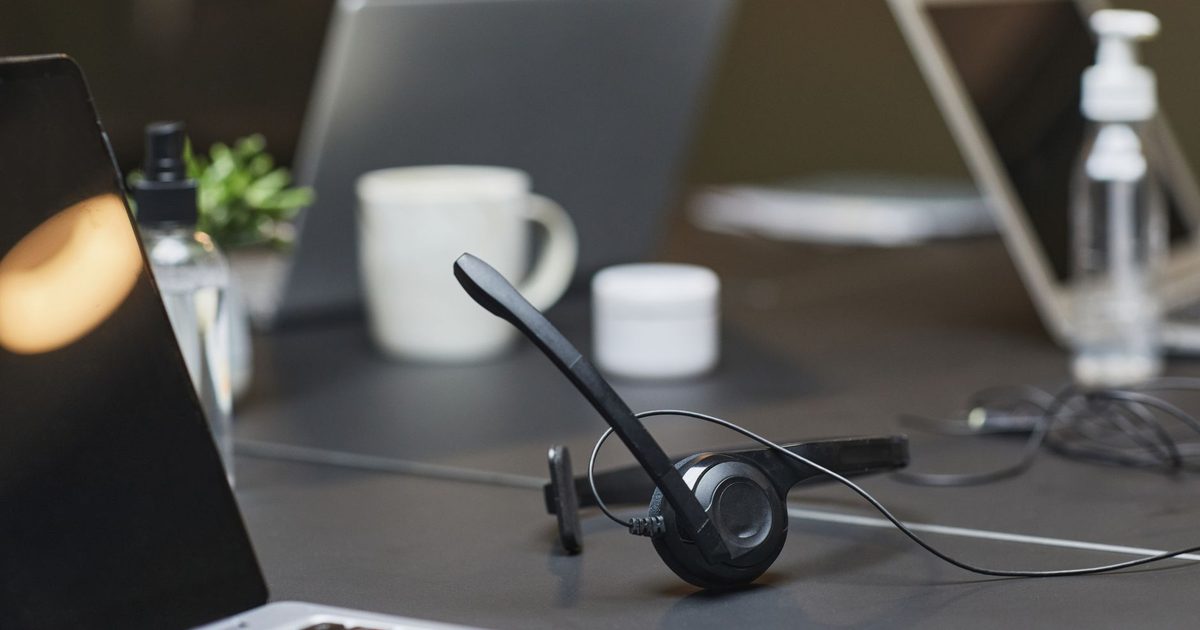
A headset keeps a call contained. The microphone sits a few centimetres from your mouth, so your voice goes in loud and the room stays faint behind it, and only you hear the far end. That tells most in two situations. The first is a room you share, with family about, a partner on their own calls, or an open-plan corner of the house, where a speaker playing every meeting out loud is either a nuisance to them or a privacy problem for you. The second is a noisy spot, where a close mic and a pair of sealed earcups simply give the person listening less to wade through. If calls fill most of your working day, a light wired or wireless headset tends to beat anything sitting on the desk, because the sound never has to cross the room to get to you. Our office headset guide works through which one suits a fixed desk, a desk you get up from, or a room with a hum to quieten.
Where a speakerphone earns its place
A speakerphone is the one to want when nothing on your head appeals. There is no band across your hair, no earcups warming up over a long afternoon, and no earpiece to charge between meetings; you press a button on the desk and talk. In a room of your own, where no one else is in earshot and the background is calm, it carries a head-up, natural conversation that plenty of people find easier to live with than being wired in all day. It also covers a case a headset cannot: when one or two other people are in the room with you and need to join the same call, the speakerphone is the only one of the two that lets everyone round the desk talk and be heard. Our speakerphone guide sets out the wired, budget and wireless options for a solo desk.
The questions that actually decide it
Set the brand names and the microphone counts aside and it comes down to a short list. Who else can hear you? If the answer is anyone at all, a headset keeps the meeting to yourself. How noisy is the room? A steady background is easier to beat with a close mic and sealed ears than with an open speaker. Do you want your ears and hands free? A speakerphone leaves both, which suits long stretches of listening more than talking, or calls where you are also writing and clicking. And is it ever more than just you? The moment a second person in the room joins in, the speakerphone is the one built for it. A lot of home workers end up owning both and reaching for whichever fits the day, the headset for a back-to-back morning and the speaker for an unhurried one-to-one in an empty house; but if the budget stretches to one, buy for the room you sit in most, not the busiest week you can picture.
FAQ
Q: Which one sounds clearer to the person I am calling? A: On a like-for-like basis a headset usually edges it, because its microphone rides a few centimetres from your mouth while a speakerphone's array sits forty to sixty centimetres away and takes in more of the room. A good focused speakerphone closes most of that gap in a quiet space, but in a busy or shared room the close mic wins. If being understood first time is the priority, start from a headset.
Q: Can I use a speakerphone in a shared or open-plan room? A: You can, but it is the setting it suits least. A speaker plays the other side of every call out loud, so a shared room turns your colleagues into everyone's colleagues, and an open-plan corner feeds the household straight into the meeting. There a headset is the better neighbour. Keep the speakerphone for a door you can shut.
Q: I already have a headset. Is a speakerphone worth adding? A: Only if it answers something the headset leaves open. If you work in a private room and find a headset wearing by mid-afternoon, or you now and then have someone sitting in on a call, a speakerphone is a real second string. If you mostly call alone from a shared or noisy space, the money is better kept for the headset you already reach for.
Q: What about calls with people in the room and people dialling in? A: That is the speakerphone's home ground. When two or three of you are round one desk calling a remote team, a single speakerphone lets the whole room talk and listen without passing an earpiece along the table. A headset is made for one head; once the meeting is partly in the room, the unit on the desk is the one that fits. The labels on headset noise cancelling trip people up here too, so if the spec sheets have you second-guessing, our ANC versus noise-cancelling mic explainer sorts out which word does which job.