
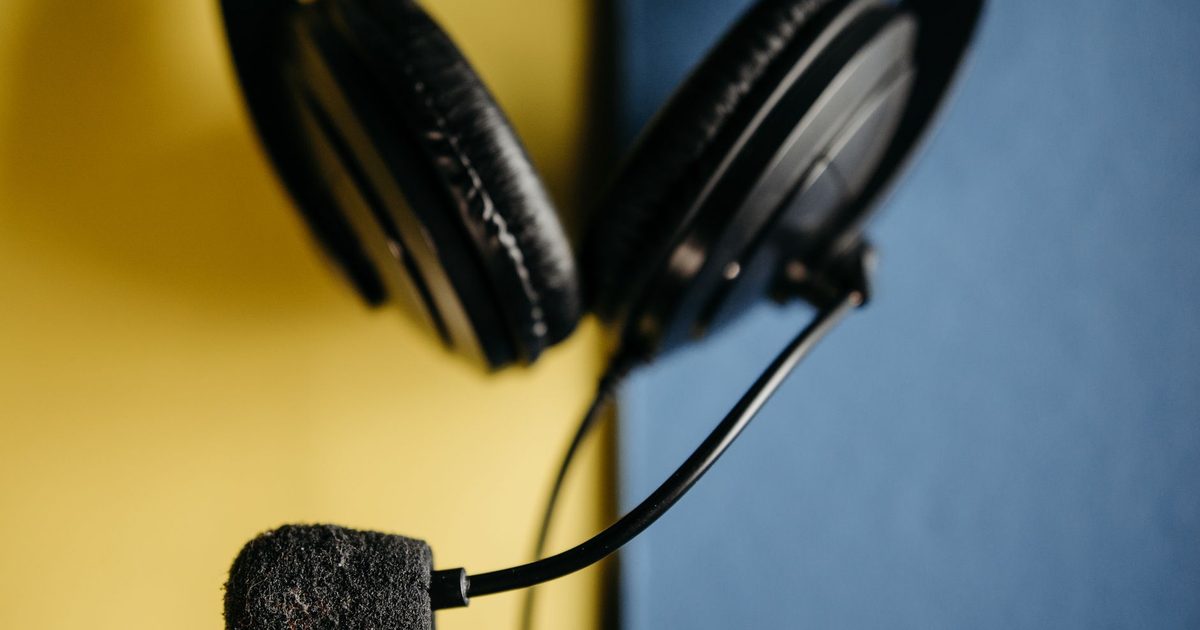
One phrase, two different parts of the headset
"Noise cancelling" gets printed on two parts of a headset that have nothing to do with each other, and the box almost never says which one it means. One version lives on the speakers and decides how much of the room you hear. The other lives on the microphone and decides how much of the room your caller hears. They pull in opposite directions, they are built and priced separately, and a headset can arrive with one, both or neither. So the useful question is never whether a headset is "noise cancelling." It is which end the cancelling happens at, and whether that is the end your calls actually need.
ANC works on what reaches your ears
Active noise cancellation, usually shortened to ANC, is the speaker-side feature. The headset listens to the constant low background around you with its own microphones, a desk fan or the drone of a fridge, and plays an opposing sound back so less of it reaches you. Two limits are worth knowing before you pay for it. It does nothing to how you sound at the far end, since that is the microphone's department entirely. And it works on steady hums, not on sharp one-off sounds like a door going or a dog starting up. There is also a quieter version you get for nothing: the ear cushions seal against your head and already block a fair slice of the room with no electronics involved. That is passive isolation, and on a reasonably quiet home desk it covers enough that true ANC is a feature you can skip.
A noise-cancelling microphone works on what you send
Turn the same phrase around and it describes the opposite job. A noise-cancelling microphone cleans up the sound leaving your headset, so your voice reaches the call in front of the room rather than buried under it. A boom that reaches down towards your mouth is the plainest form, because it simply sits closer to your voice than to anything else in the room. More elaborate sets run several microphones at once and aim the pickup at your voice while holding the background behind it, which is what a name like Acoustic Fence is describing. If the complaint on your calls is that people keep hearing your kitchen or your keyboard, this is the side that answers it, and ANC will do nothing for it.
Read the spec sheet for each one on its own
Because the two features are independent, the only reliable way to buy is to find each line on the listing separately and not let the headline word stand in for both. The three headsets in our office headset guide land in three different places:
- The Logitech H390 is a wired USB headset with a noise-cancelling boom microphone and no ANC on the audio side at all. It answers the caller-side problem and leaves the other one alone.
- The Jabra Evolve2 65 puts its effort into the microphone too, a three-mic system aimed at your voice, while on your ears it leans on the seal of its cushions rather than active noise cancellation. Watch the model name here, though: the near-identically named Evolve2 65 Flex does add hybrid ANC, so the badge on the box will not settle it for you.
- The Poly Voyager Focus 2 is the one that carries both. Its ANC is switchable between high, low and off on the audio side, and a four-microphone noise-cancelling boom with Acoustic Fence handles the voice side.
Two of those three have no true ANC, and all three take care of the microphone. That is the usual shape for a work headset, because the caller-side problem is the common one. Which of them suits your desk is its own question, and the office headset guide works through it; the aim here is only to stop one word on the box from standing in for two different jobs.
FAQ
Q: Do I need active noise cancelling for work calls? A: Usually not, if your desk is reasonably quiet. ANC changes what you hear, not what the other side hears, so it does nothing for how clear you sound on a call. The ear cushions already block a fair amount on their own, and the microphone is what decides how clearly you come across. Keep ANC for a genuinely noisy or shared room, where you would rather hear less of a constant background while you talk.
Q: Will noise cancelling stop my caller hearing my room? A: Only the microphone side does that. If people on your calls keep picking up your background, the fix is a noise-cancelling microphone: a boom that sits near your mouth, or a multi-microphone array that aims at your voice. An ANC badge on the audio side will not help, because it works in the wrong direction entirely.
Q: A headset says "noise cancelling" but only once. Which kind is it? A: Look at where the claim sits on the spec sheet. Under the microphone, or beside a boom or a mic-array name, it is the caller-side kind. Listed as active noise cancellation or ANC against the audio or the ear cups, it is the wearer-side kind. Plenty of headsets list only one because they only have one, so the placement is the tell.
Q: Is passive noise isolation the same as ANC? A: No. Passive isolation is just the physical seal of the ear cushions against your head, blocking sound with no electronics. ANC is an active feature that needs power: the headset senses a steady background through its mics and produces a counter-sound that cancels part of it. A headset can have a good seal and no ANC at all, which is exactly the case with the standard Evolve2 65.
Q: What if I would rather not wear anything on calls? A: Then the noise handling moves off your head and onto the desk. A speakerphone runs the call through its own speaker and mic with no headset to wear, which works best in a room of your own; a standalone desk microphone lifts your voice further than a mic built into an earcup can, if being heard clearly is what you are after. The webcam guide deals with the camera, which is a separate decision again.