
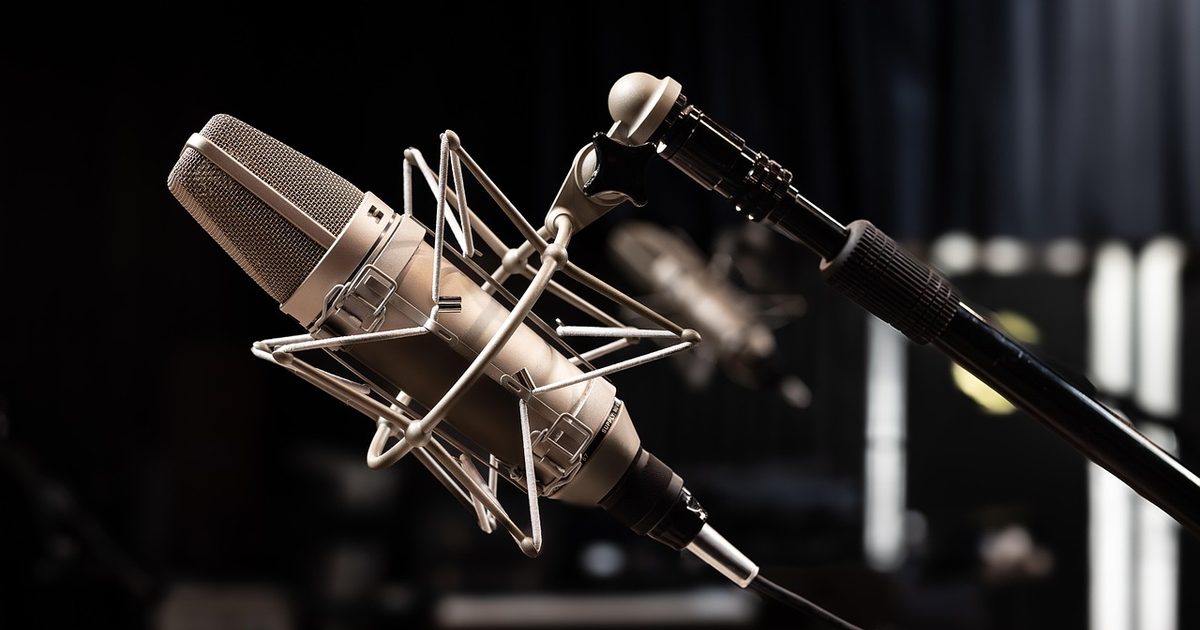
What phantom power actually is
Phantom power is a supply that condenser microphones of the older, studio kind need in order to work at all. MXL, which makes them, describes it as the voltage "often notated on equipment as '48V', which represents the 48 volts of DC power that charges the microphone's diaphragm and internal amp." It travels down a three-pin XLR cable from a mixer, an audio interface or a preamp, and the capsule will not produce a usable signal without it. So an XLR condenser with nothing supplying the 48 volts behind it simply sits there silent. That is the world the term belongs to: an XLR lead running into a box that provides the voltage. That picture matters here, because a USB microphone lives nowhere near it.
USB or XLR: the socket is the tell
A USB microphone plugs into the computer, and the computer sends it all the power it needs down the very same lead. MXL again, plainly: "USB microphones do not need phantom power. Your computer will provide enough power through the USB connection to charge the microphone and operate correctly." That makes the fastest check a physical one. Look at how the microphone connects: a USB lead of any shape, whether micro-USB, USB-A or USB-C, means the power question is already settled and there is nothing for you to supply. A bare three-pin XLR socket and no USB anywhere means the opposite, that you will be providing the 48 volts yourself from something further down the chain. A microphone does not fall into both camps by accident. The connector on the end of its cable decides which rules it plays by.
The "48V" box sold beside USB microphones
Search for a USB microphone and you will often be shown a small box alongside it, labelled something like "48V phantom power supply, for any condenser microphone." The phrase that catches people is "any condenser microphone," because a USB mic is a condenser too, so it reads as though the box belongs with it. It does not. That box has XLR sockets, and it sends its 48 volts out down an XLR cable. A USB microphone has no XLR input for it to plug into, so the supply has nothing to connect to and nothing to do. Buying one to go with a USB mic is buying a part for a socket the microphone does not have. If the cable coming out of your microphone ends in a USB plug, this is simply not an accessory that applies to you.
What the three desk mics in our guide draw
The three microphones in our USB microphone guide are all USB, and not one of them has an XLR socket or any use for phantom power. The Logitech Blue Yeti lists its power as 5V 150mA and draws exactly that from the port over its micro-USB lead. The FIFINE K669B connects over its own USB cable and runs on that same bus power. The Elgato Wave:3 does likewise over USB-C. In each case the computer is the power supply, which is the entire convenience of the format: one cable carries the power and the audio together, and there is no separate voltage to arrange. The question only comes back if you later move up to an XLR condenser, which brings a mixer or an interface along with it. That is a different purchase with its own setup, and the note on interfaces in that guide covers where the line falls. For a microphone that ends in a USB plug, the answer stays no.
FAQ
Q: My USB mic is a condenser. Doesn't a condenser need phantom power? A: Not when it is a USB condenser. The idea that condensers need phantom power comes from the XLR studio world, where the 48 volts charges the capsule. A USB condenser uses the same kind of capsule but takes that power from the USB port instead, so the old rule does not carry across. What decides it is the connector, not the word condenser: a USB plug means the computer powers it, an XLR plug means you supply the 48 volts.
Q: Some microphones have both a USB and an XLR output. What about those? A: A few do, and how they are powered depends on which lead you use. Over USB they run on bus power like any other USB mic; connected by XLR they behave as an XLR condenser and want 48 volts from whatever they are plugged into. The maker's own page says which modes a given model supports, so read that rather than assume the two connections work the same way.
Q: Can a USB hub power a USB microphone? A: Usually, and it helps to glance at the figures. A USB mic draws a small, steady current, the Blue Yeti for instance asking for 5V 150mA, which a powered hub supplies without trouble. An unpowered hub shared with other demanding devices is where a mic can be left short and drop out. If one misbehaves on a hub, plugging it straight into the computer is the first thing to try.